
Window shell
- WIN-01 MUST A status bar is always present (it can be toggled). Its left side is the echo area: one line
of feedback for the last action, errors in red and warnings in amber. Clicking it opens the Message Log.
- Check (code): the echo label switches between an error and a warning style class, and its click handler runs the Message Log command.
- Reference: Editora
ui/StatusBar.java(status-echo-error,status-echo-warn; a click runsview.messageLog) and the Message Log template.
- WIN-02 MUST Light and dark AtlantaFX themes and a “follow the system” choice, switchable at run time
without a restart. Semantic colors: amber is not durable yet (unsaved, read-only), red is broken, green is verified
or added. See Icons and color.
- Check (code): one place applies the app theme to every open window, and the theme list has a system choice that follows the OS color scheme as it changes.
- Reference: Editora
ui/Themes.java(applyAppTheme) switches at run time andui/WindowColorScheme.javatells every window’s frame which scheme it is in; Miradaui/Theme.java(ThemeChoice.SYSTEM) follows the system. Editora has no system choice yet.
- WIN-03 SHOULD The title bar uses JavaFX 27’s
HeaderBarwithStageStyle.EXTENDEDto carry the menu or tabs, with a decorated-window fallback, anduseSystemMenuBaron macOS.- Check (code): the main stage is created
StageStyle.EXTENDEDwith aHeaderBar, a setting falls back to a decorated window, and the menu bar setsuseSystemMenuBaron macOS. - Reference: Editora
ui/ExtendedWindow.java,ui/MainMenuBar.java.
- Check (code): the main stage is created
- WIN-04 SHOULD Native dialogs go through one helper that attaches the app stylesheet and the UI font.
- Why: a dialog is its own scene and inherits neither.
- Check (code): every
AlertandDialogthe app builds passes through the helper. - Reference: Editora
ui/Dialogs.java(Dialogs.styled).
- WIN-05 MUST A destructive action asks first, and says what it does. Removing, deleting, discarding or
overwriting something the user made goes through one confirm helper: the question names the thing (“Remove 3
torrents?”), the confirm button names the action (Remove, Discard, Overwrite), never OK or Yes, and Escape cancels.
Where the action can be undone instead, the undo is better than the question. See the
Confirm dialog template.
- Check (code): each destructive action calls the one confirm helper before it changes anything, or records an undo.
- Reference: Torrenta
RemoveConfirmandUndoStack; Editora’s save decisions (ui/CloseCoordinator.java); Termina’s and Editora’s reopen-closed-tab.
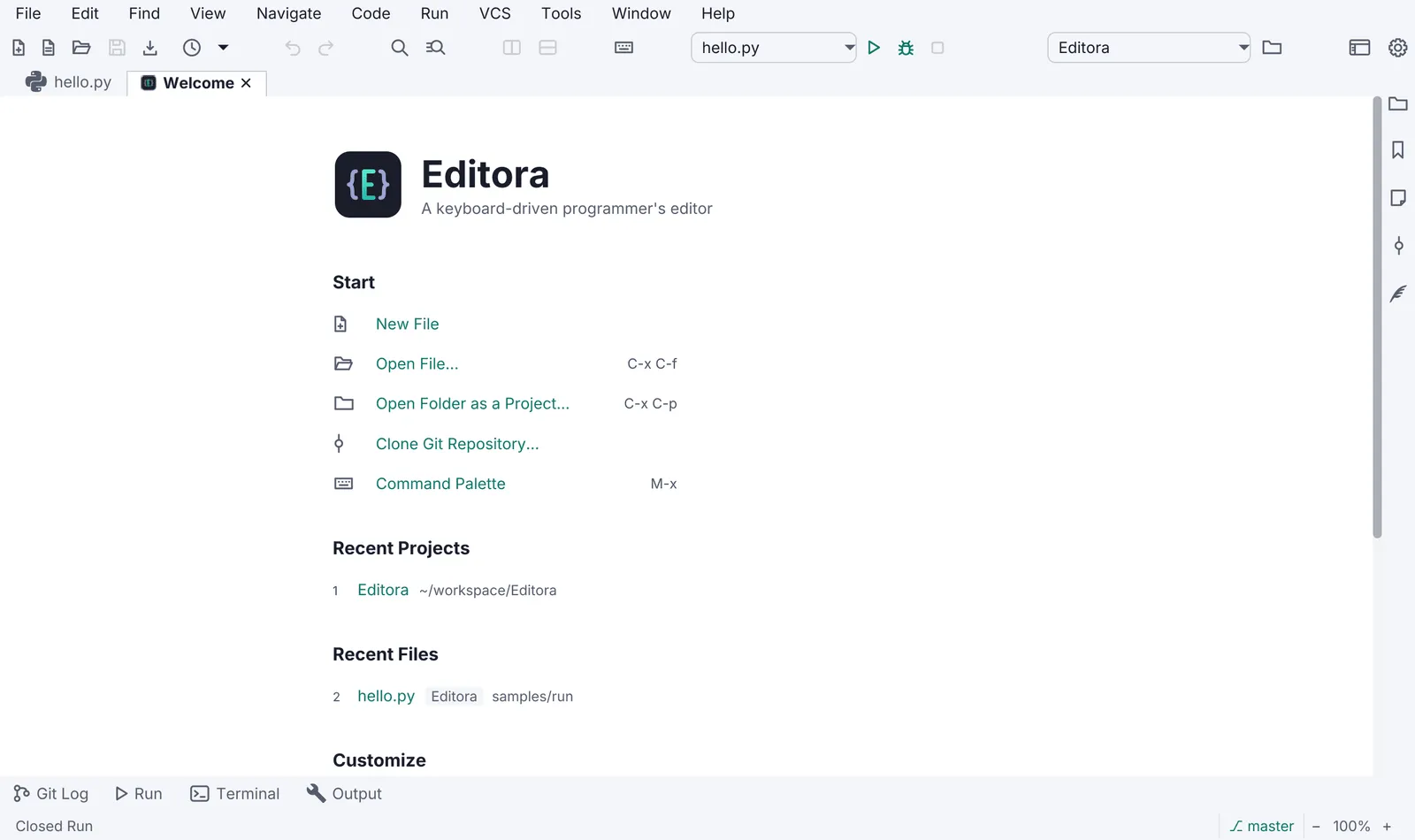
- WIN-06 SHOULD A Welcome page when there is nothing to restore: Start actions (which run commands), Recent
items, a Customize block (keymap and theme) and Help links. See the Welcome template.
- Check (by hand): start the app with no session to restore.
- Reference: Editora
ui/WelcomePane.java.
- WIN-07 MUST About shows the version, the build, the Pauta edition the app implements, the runtime (Java and
JavaFX versions), the license, links, and the result of the last update check. See the
About template.
- Check (code): the About window reads the version, build and edition from
AppInfoand shows the update checker’s last answer. - Reference: Editora
ui/AboutDialog.java. No app names its Pauta edition yet.
- Check (code): the About window reads the version, build and edition from
- WIN-08 SHOULD Window size, position, maximized state and open items are restored on the next launch;
--no-sessionskips the restore.- Check (test): a round-trip test of the saved workspace state, and a test that
--no-sessionis honored. - Reference: Editora
config/WorkspaceState.java(windowX…windowMaximized),ui/WindowSessionCoordinator.java,App.noSessionFlag; testsWorkspaceStateV29Test,AppArgsTest,NoSessionStartupFxTest.
- Check (test): a round-trip test of the saved workspace state, and a test that
- WIN-09 SHOULD UI and content zoom from the keyboard (
Ctrl/Cmd +,-,0), kept across launches.- Check (code): zoom in, out and reset are commands bound in every keymap, and the zoom level is a saved setting.
- Reference: Editora zooms content only:
view.textZoomIn,view.textZoomOutandview.textZoomReset, kept inSettings.fontZoom.
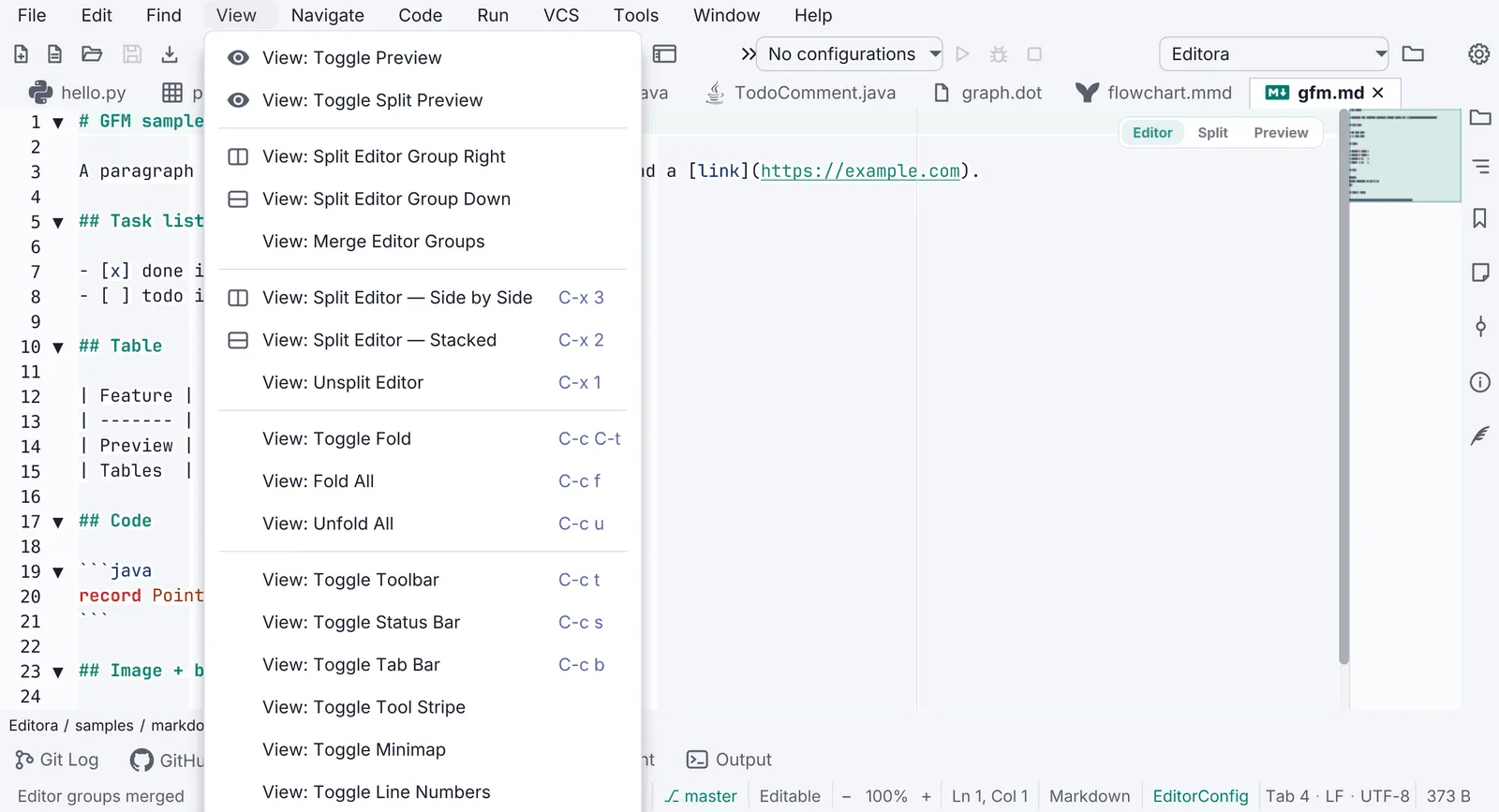
- WIN-10 MAY Modes: Zen (no chrome), Simple (fewer menus for new users), Expert.
- Check (code): each mode is a command, and one truth table decides which chrome each mode shows.
- Reference: Editora
ui/WindowChromeCoordinator.java(toggleZen,applySimpleMode) over the truth table inui/Chrome.java.
Pauta 2.0.1 · · Changelog · This page in the latest edition